
Not Everything That Is Heavy Is Yours to Carry
Trail Notes | Real Talk
some weight was assigned, not chosen
Not Everything That Is Heavy
is yours to carry
Some burdens are visible. The packed schedule. The overflowing washing basket. The list that grows faster than you can complete it.
Others are harder to name. Remembering what everyone needs. Absorbing tension before it becomes conflict. Managing disappointment. Keeping plans, relationships and households moving without anyone noticing the work required.
Over time, responsibilities that were inherited, absorbed or silently assigned can begin to feel like part of who we are. We carry them so consistently that we stop asking whether they were ever ours by choice.
But not everything that feels heavy is evidence of a personal limit. Sometimes it is evidence that one person has been carrying too much of a shared life.
Before asking how to carry it better, ask whether it belongs in your hands at all.
The answer may not make the weight disappear. It can change what you do with it next.
Real Talk | 01
The weight women are taught to absorb
Across generations, many women have been socialised to take responsibility for care, harmony and the smooth running of everyday life. Not every family follows this pattern, and not every woman experiences it in the same way. But the broader imbalance is visible in the data.
The Australian Bureau of Statistics found that in 2024, females who participated in unpaid work spent an average of four hours and fifty three minutes on it each day. Males spent an average of three hours and fifty two minutes. Females were also more likely to participate in unpaid work at all.
An hour a day may sound manageable when considered once. Across a year, it becomes hundreds of additional hours. Across the years when women may also be working, parenting, caring for older relatives or managing their own health, it becomes a significant claim on time and energy.
The issue is not that care lacks value. Care is essential. The issue is what happens when its ownership is assumed rather than discussed, and when the person carrying it is expected to make the work invisible.
The problem is not caring deeply. It is becoming the default owner of every form of care.
Real Talk | 02
The work of holding everything in mind
Some work can be counted. Meals cooked. Appointments attended. Hours spent cleaning or driving. Other work takes place before the visible task begins.
It is noticing that the groceries are running low. Knowing which permission form has not been returned. Remembering who needs a birthday message. Anticipating the tension a decision may cause. Planning the conversation that will keep everyone comfortable.
This mental and emotional labour does not always produce a visible outcome. Often, its success is measured by what did not happen. Nobody ran out of medication. Nobody missed the appointment. Nobody felt forgotten. The household did not fall into chaos.
Because the result looks effortless, the labour disappears. The person carrying it may then struggle to explain why she is exhausted when the visible list does not appear long enough to justify how she feels.
The work beneath the work
Noticing: seeing what needs attention before anyone asks.
Remembering: holding deadlines, preferences and details in your head.
Anticipating: preparing for needs and problems that have not arrived yet.
Regulating: changing your response to keep other people comfortable.
Following through: ensuring the task is actually completed, not simply discussed.
Real Talk | 03
When carrying becomes part of your identity
Responsibility can become tangled with worth. Being needed feels like being valuable. Keeping everyone happy feels like being loving. Carrying more than your share becomes evidence that you are strong.
This is why putting something down can feel more uncomfortable than picking it up. Saying no may bring guilt. Asking someone else to take ownership may feel selfish. Allowing another person to experience the consequence of their own inaction may feel cruel, even when continuing to rescue them is costing you.
But guilt is not always proof that you have done something wrong. Sometimes it is the feeling that appears when you stop performing a role other people have become comfortable with.
The first boundary may feel unnatural simply because overfunctioning has become familiar.
You can love people without carrying every consequence for them.
Care and unlimited responsibility are not the same thing.
Real Talk | 04
Not all weight can be set down immediately
There is a version of the boundary conversation that sounds simple: identify what drains you, say no and walk away. Real lives are rarely that clean.
You may be the only available carer. You may need the income. You may be managing disability, illness, parenting arrangements or financial constraints. The person who should share the responsibility may refuse to do so. There may be genuine consequences if a task is left undone.
Recognising that a burden is unfair does not always create an immediate way to leave it behind. But naming the truth still matters. It allows you to stop interpreting structural pressure as personal inadequacy.
Sometimes putting the weight down begins with carrying it differently. Asking for practical help. Lowering an unnecessary standard. Sharing information. Paying for support when possible. Refusing to hide the real cost. Making one part of the load visible to someone who can help change it.
The fact that you cannot release a responsibility today does not mean you must pretend it is fair.
Real Talk | 05
When the weight is being imposed
There is also an important distinction between an unequal relationship and a controlling one.
Coercive control is not simply poor communication or weak boundaries. It is an ongoing pattern of behaviour used to dominate, isolate, intimidate or restrict another person. It can include financial control, monitoring, belittling, social isolation and interference with a person’s independence.
In that context, direct boundary setting may carry risk. The responsibility for the controlling behaviour belongs to the person using it, not the person trying to survive it. Safety, specialist support and practical planning matter more than finding the perfect words.
Leaving or separating may not immediately end the control, particularly where finances, housing or children remain connected. Women should not be blamed for staying, leaving slowly or making decisions that outsiders do not understand.
An important distinction
If expressing a need or setting a limit could increase intimidation, punishment, monitoring or violence, this is not simply a boundary issue. Consider seeking confidential support from a specialist family violence service or appropriately qualified professional before confronting the person directly.
Real Talk | 06
The trail teaches us to examine the load
On the trail, every item asks something of you. Extra weight changes how you climb, how your body responds and how much energy remains for the kilometres ahead.
This does not mean we carry nothing beyond the essentials. Sometimes we carry extra water for someone who needs it. Sometimes we share equipment or take more of the group load for a while. Care has always been part of moving together.
But shared movement requires awareness. If one person is consistently taking everyone else’s weight while the rest of the group moves freely, that is not sustainable support. It is an imbalance.
Life deserves the same discernment. Not the removal of all responsibility, but an honest examination of what you carry, why you carry it and whether the load has ever been shared fairly.
A strong community does not celebrate one woman for carrying everything.
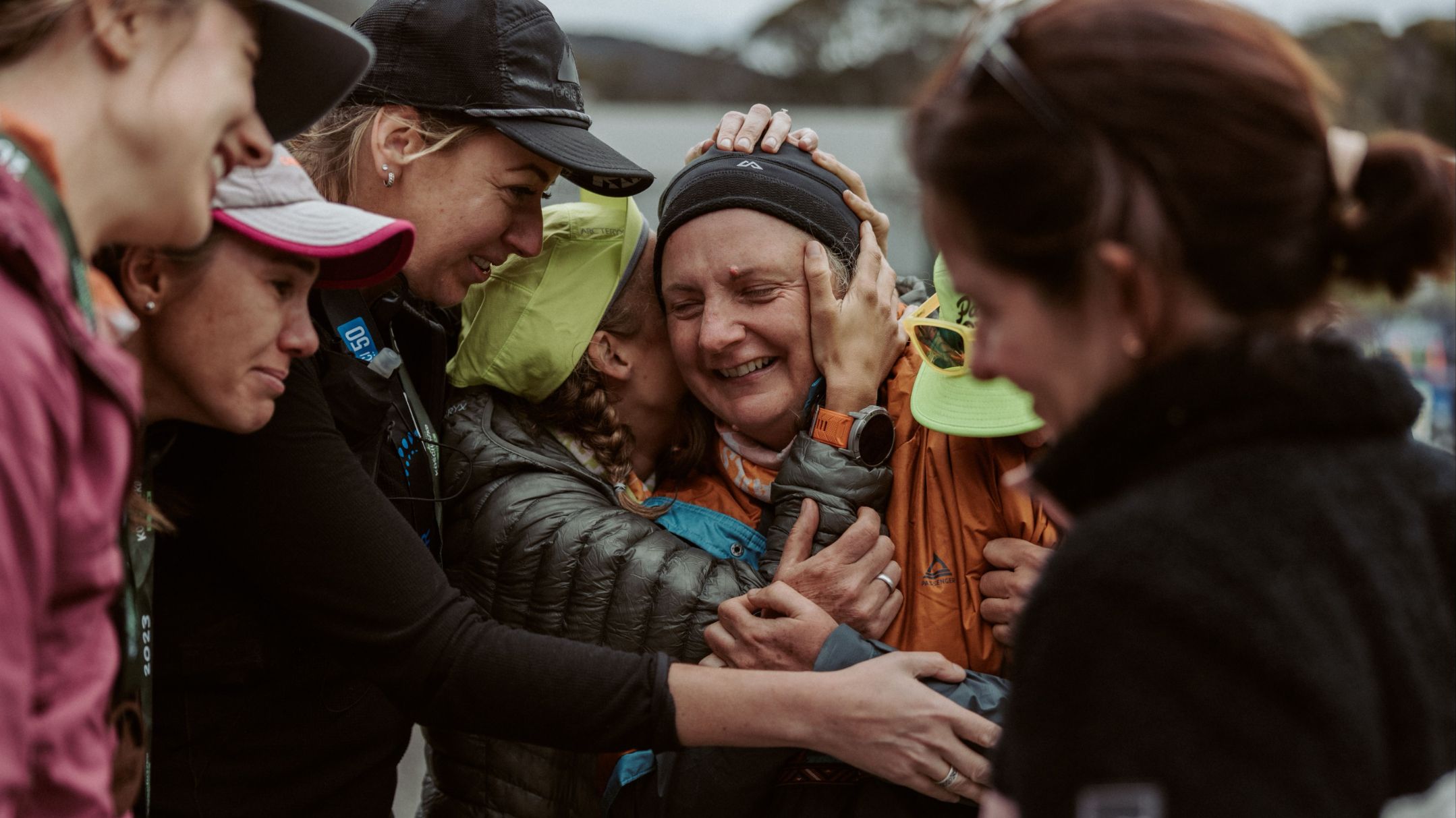
It notices the load and moves closer.
Real Talk | 07
Learning to set something down
You do not need to dismantle your entire life in one courageous act. Start by identifying one responsibility that has become yours without discussion.
Name the full task
Include noticing, planning, remembering and following through, not only the final visible action.
Question ownership
Ask whether the responsibility belongs to you, is genuinely shared or has become yours through habit.
Transfer ownership
Share the whole responsibility where possible. Delegating a single action while retaining all the planning is not a meaningful redistribution.
Allow a different method
Sharing ownership means allowing another capable person to complete the task differently, provided the outcome remains safe and adequate.
Expect discomfort
A new boundary may produce guilt or resistance. Discomfort does not automatically mean the boundary is wrong.
Find practical support
Some loads require community, professional care, financial advice, advocacy or formal services, not more personal resilience.
Words you can use
“I can help with this, but I cannot own all of it.”
“I have been managing this by default. We need to decide how responsibility will be shared.”
“I understand that you are disappointed. I am not able to change my decision to remove that feeling.”
Real Talk | 08
Strength is not how much you can absorb
There will always be seasons when we carry more. Someone becomes ill. A friend needs support. A child needs us differently. Shared lives are not built through perfectly equal contributions every day.
The question is whether the imbalance is acknowledged, whether it changes when circumstances change and whether your needs remain part of the picture.
You are not failing because carrying everything has become too much. You may be receiving accurate information about a load that was never sustainable.
Not everything that is heavy is yours to carry. Not everything that is yours must be carried alone. And setting something down can be an act of responsibility towards the life and body you still need for the road ahead.
Reflection prompt
What am I carrying because it is genuinely mine to hold?
What have I absorbed through guilt, habit or someone else’s expectation?
What is one part of the load that could be named, shared or set down?
you were never meant to carry it all
Written by Her Trails
Trail Notes are thoughtful, evidence informed conversations for women navigating movement, identity, wellbeing and the realities of full lives.
Key references
Australian Bureau of Statistics, How Australians Use Their Time, 2024. Australian Bureau of Statistics, Employment in the 2021 Census. Australia’s National Research Organisation for Women’s Safety, National Risk Assessment Principles for Domestic and Family Violence. Hegarty K et al., Listening to the voices of victims and perpetrators to transform responses to intimate partner violence, ANROWS.
General education and personal reflection only. If you are experiencing coercion, intimidation or family violence, consider seeking confidential support from a specialist service or appropriately qualified professional. If there is immediate danger, contact emergency services.